September 14, 2010

#16: That Is A Nice Ball You Have

(M, 1931, Fritz Lang)

WARNING: SPOILERS AHEAD!

I have a general distaste for old movies. I'm not sure if I've ever mentioned that before, but it's probably important that my readers know that. It could explain why I didn't love Vertigo, which I discussed in my previous post. This distaste almost certainly stems from my opinion that the acting in old movies is generally over the top and somewhat ridiculous because many of those actors were trained for stage acting, which is much more emotive. For the most part, my favorite movies were made after 1970. But I adore M. I absolute love it, despite the fact that Fritz Lang made it in 1931.
 
What surprises me most about M is the fact that it was Fritz Lang's first talkie. All of his previous films (including the much lauded Metropolis) were silent. To me, logically, a director's first foray into sound films would be somewhat clumsy, especially if said director had made a number of well-regarded silent films. The transition from silence to sound was a difficult one for many filmmakers (see Singin' in the Rain for a comedic interpretation of that problem), but Fritz Lang used the new technology brilliantly, even making sound an important part of the plot.

M is almost entirely devoid of music, save for one recurring motif. Hans Beckert (played by Peter Lorre) often whistles Grieg's "In the Hall of the Mountain King" while he is out walking the streets, searching for children to kidnap and murder. At the start of the film he buys a balloon from a blind beggar for young Elsie Beckmann while whistling the tune. Elsie becomes his newest victim, sending all of Berlin into a furious search for the man who is killing the city's children. And that whistled tune becomes the key to solving the whole mystery.

Beckert knows what he's doing. He's careful and calculated, and up until he writes a letter to the newspapers that essentially eggs on the authorities they basically have no leads regarding who or where he is. Partly because it's 1931 and they don't have things like DNA comparison, and partly because Beckert has perfected his technique. Except for the whistling. Because when he brings another child to that same blind balloon seller it is the whistling that gives him away. And none of this ever could have happened if M had been a silent film. Title cards that read "Beckert whistles 'In the Hall of the Mountain King'" just don't have the same effect.

When I watch M all I can do is think about what a work of genius it truly is. That's it. It's stunning, and as all of the plot developments happen all I'm thinking to myself is "this is brilliant." And that's really all there is to it.

September 10, 2010

#15: You Were A Very Apt Pupil!

(Vertigo, 1958, Alfred Hitchcock)


Well hello, Alfred Hitchcock. I get the feeling I'll be seeing a lot of you on this journey. Perhaps because you have 10 films on The List. But that's okay, I'd rather watch 10 Hitchcock's than 10 Lars von Trier's.

So, here I go into the realm of Hitchcock. I started with Vertigo because it's been on a lot of lists like this (it's on all of the AFI lists that they could logically put it on), and pretty much everyone I know who's seen it has enjoyed it. So, after watching the Ducks stomp all over the New Mexico State Lobos, I sat down to watch Vertigo fully prepared to be completely floored by it. Well... I wasn't. But that isn't to say that I didn't like it.

The first Hitchcock film I ever watched was The Birds. It was at least 9 years ago because we were still living in Arizona at the time, and even then I knew I'd just watched something pretty incredible. Since that viewing, I had seen a total of zero Hitchcock films in their entirety until now. Don't get me wrong, Vertigo was good. It just wasn't The Birds, which for some reason I hold as the ultimate Hitchcock film even though 100 film scholars would probably want me pecked to death by ravens for it. I guess it's just that it was my first Hitchcock, and when I sat down to watch it with my parents I had no idea what was coming. And not knowing made it incredible. Which brings me back to Vertigo.

I went into Vertigo knowing entirely too much. Sure, I didn't know the big twist that happens about three quarters of the way in, but I knew about the protagonist's crippling fear of heights, and I knew about his obsessive love for Kim Novak's Madeleine. I wish that I hadn't, because I may have been more affected by the plot developments if I'd been completely unprepared for them. Then again, maybe not. As I mentioned 14 posts ago, the first time I saw Fight Club I knew exactly what was coming in the end, but Fight Club still stands tall as one of my favorite movies ever. Vertigo, on the other hand, does not. So maybe preparation wasn't the problem. But I'd like to believe that if I hadn't seen any of it coming I would have enjoyed it a lot more.

This in no way means that I didn't enjoy watching Vertigo at all. I really did. I can already see that Hitchcock was clearly one of the great innovators of cinema, and I'm excited to watch more of his films (particularly the ones that I've never heard of and know nothing about). I guess that I expected a lot because of how much scholars and critics love this film, but what can I say? It just wasn't my thing. Then again, neither was Citizen Kane.

September 7, 2010

#14: We'll Wriggle Out Of This Somehow

(Lost in La Mancha, 2002, Keith Fulton and Louis Pepe)

Watching Lost in La Mancha made me realize that this project is probably going to involve me learning a lot of new things about myself. So far I've learned that it took me about 5 years too long to see Boogie Nights, that watching Babe will always make me cry and momentarily question my love of bacon, and that nothing will ever dim my love for Mean Girls. My most recent learning moment came with the viewing of this film, and it boils down to this: I'm not really fond of documentaries.

This is the first documentary from The List that I've watched, and I made an active point to choose one that had subject matter I was interested in. I'm generally not especially fascinated by all of the gritty details about how the film industry cranks out its product, but Lost in La Mancha had a few things going for it. First of all, it's about the failed production of an adaptation of The Man of La Mancha directed by Terry Gilliam. I have a thing for catastrophes and fiascoes, and the production of The Man Who Killed Don Quixote (the title of the adaptation) is exactly that. I don't know why, but I like when things crash and burn, and I really like it when I can watch and try to understand what made everything come tumbling down. Secondly, Johnny Depp was cast to be the star of The Man Who Killed Don Quixote, and I'll use any excuse I can to watch Johnny Depp. Finally, even though I've only seen one of his films in its entirety, I find Terry Gilliam to be a pretty fascinating guy. His films are quirky and off the wall, and also deal with subjects like dystopia and sanity, which is pretty much right up my alley. But despite all of those factors, I found Lost in La Mancha to be kind of a snooze.

I honestly don't know why I didn't really like Lost in La Mancha. Maybe it was just too sad watching Terry Gilliam's dream of his film being made fall apart in his hands. He was plagued with problems ranging from lack of funding to an all-to-restrictive schedule to crazy weather. Nothing went right for the guy. And he was clearly doing everything he could to try to save it, and it just didn't happen. My usual enjoyment of watching a catastrophe in action dimmed quite a bit when I was forced to see the faces of the people that it was directly affecting. I wasn't just hearing about a ship that sank over a hundred years ago, or a volcano that erupted and destroyed a whole city two thousand years ago. I was seeing a real, living, breathing person watching their dreams crashing down around them as it happened. Suddenly it wasn't so fun.

Of course, in the end, I can't feel to0 bad for Terry Gilliam. He's already announced that he's making another attempt at The Man Who Killed Don Quixote, and it's hard to feel that bad for a guy who fights that hard for something he wants to do. For Gilliam, Lost in La Mancha will most likely just be something that he looks back on as a very large speed bump on his road to making a movie. And if The Man Who Killed Don Quixote ever gets made, I can see it and at least find some satisfaction in knowing that I understand a little more about how it came into being.

September 4, 2010

#13: You Stay Alive, Baby. Do It For Van Gogh.

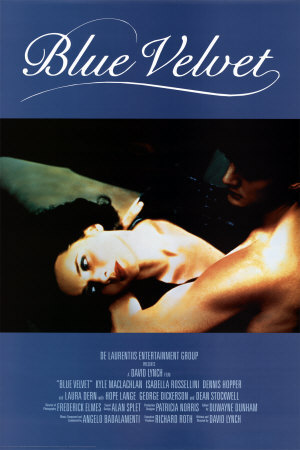
(Blue Velvet, David Lynch, 1986)

Writing my "analysis" (I use the term loosely) of Blue Velvet is a little bittersweet considering that I watched this film with my former other half. At the time I never thought that this would become a solo venture, but alas, here we are. Or, more accurately, here I am. But I don't want to bog down this post with sentimentality because Blue Velvet is really a remarkable film. A remarkably bizarre film.

There are very few films that I can honestly say have ever made me feel truly uncomfortable. Aspects of Pan's Labyrinth really made me cringe, and The Shining always makes my skin crawl despite my everlasting love for it, but Blue Velvet may be the first movie I've ever seen that made me downright uncomfortable in my own skin. Most of the time I felt like I was watching something very private, that shouldn't have been released for audiences to view. When Kyle MacLachlan's Jeffrey Beaumont first witnesses the interaction between Frank Booth (played by Hopper) and Dorothy Vallens (Isabella Rossellini) from the inside of Dorothy's closet, I honestly felt like I was hiding in there with him, and at any second Booth was going rip open the door and catch both of us in our act of voyeurism. Like watching the proverbial train wreck, I found myself riveted to what was on screen, all while wishing that I could bring myself to look away. I knew that I should keep watching (because in a perverse, wicked way I knew I was in for a real cinematic treat), but nothing about the situation felt right. It felt uncomfortable.

And then, on top of all the visual weirdness that was happening on the screen, there was also constant presence of "Blue Velvet," the song that the film takes its title from. The song, which was recorded by Bobby Vinton in 1963, would be just another charming 60's ballad if it weren't for the images that accompany it in this film. If I'd have heard "Blue Velvet" under other circumstances I would have thought, "gee, what a nice song about a man in love with a woman who happens to wear a blue velvet dress." Of course, after watching Blue Velvet I will now think to myself "oh god, this is that song from Blue Velvet that Booth likes to hear Dorothy sing before he does terrifying things to her." No matter how hard I try, I will forever associate the song with Dennis Hopper getting high on amyl nitrate and violating Isabella Rossellini. I can't help it. And, try as I might, I won't be able to think of the song as "charming" alongside those other thoughts.

I've tried and retried to find a way to wrap this post up, and for some reason I'm finding it bizarrely challenging. So here's the gist. Blue Velvet is good. Like... really good. It's not one that I'm likely to ever forget, and I look forward to the day when I get the chance to watch it again. Yes, it's rather disturbing and uncomfortable to watch, but I guess that's not really surprising. I mean, when a film starts with a young man finding a human ear you should be prepared for it all to go downhill from there.

September 1, 2010

#12: Four For You, Glen Cocco. You Go, Glen Cocco!

(Mean Girls, Mark Waters, 2004)

I have an unholy love for Mean Girls. That needs to be said from the start. There is absolutely no concrete, defensible reason for me to love this movie as much as I do. Except maybe the fact that Tina Fey wrote it. But that's beside the point. The point is that my love for this movie is that of an out of control, crazy person. So... keep that in mind.

What I love about Mean Girls is that it lives in a universe that's just barely an exaggeration of the one that we actually live in. For example, I didn't know anyone in high school who looked like Regina George, acted like Regina George, lived in a house like Regina George's, or had parents like Regina George's. Then again, maybe I was hanging out with the wrong people (or the right ones, depending on how you want to look at it). However, while I didn't know anyone who was identical to The Queen Bee, I certainly knew an awful lot of people who bore a close resemblance. And that's where the genius of Mean Girls lies. No high school is exactly like North Shore High School, but no high school is far off, either. Mean Girls strikes the perfect tone because it's real enough that you don't think to yourself "well, that could never happen," but fake enough that it isn't completely terrifying.

I'll admit, there are times when Mean Girls almost pushes it too far. As far as I knew, the "slut rule" for Halloween didn't exist until college (I'm sorry, but no girl I ever knew in high school would have gotten away with just wearing "lingerie and some form of animal ears" on arguably the most dangerous night of the year). No mom would ever walk in on her daughter making out with a guy and ask if they needed a condom and then just walk out when she didn't get an answer. And no dad, no matter how much time he's spent in Africa, would not know that when kids are grounded you aren't supposed to let them out of the house. But that's okay. I don't care. Because all of those things are funny. That Tina Fey knows what she's doing. I mean, count the Emmys.

So there it is. I love Mean Girls. I always will. It's another movie that I can recite along with the actors. Honestly, I could probably recite most of it from memory without the actors. But don't judge me too harshly. Because I might just push you in front of a bus.